

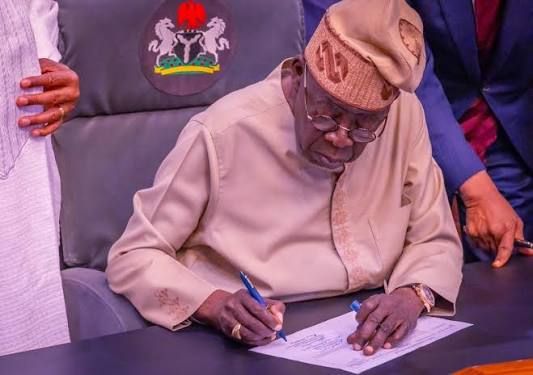
President Bola Tinubu has approved the payment of ₦2.8 trillion to Nigeria’s power generation companies (GenCos) — but only after a rigorous audit slashed their original ₦6 trillion claim by more than half.
Newsconnect reports that the approved sum represents the Federal Government’s verified electricity subsidy debt accumulated since 2010. However, the President drew a firm line against what officials described as “inflated and unjustified” claims, making it clear that no kobo beyond the audited ₦2.8 trillion would be paid.
Presidency and Ministry of Power sources disclosed that Tinubu insisted on a comprehensive review of the figures submitted by the operators, wary of past subsidy controversies.
The audit — conducted jointly by the Federal Ministry of Finance, Nigerian Bulk Electricity Trading (NBET), and the GenCos — ultimately knocked off over ₦3 trillion from the initial demand.
The development comes amid accusations by the Nigeria Labour Congress (NLC) that some operators were attempting to siphon public funds through exaggerated claims.
Bond Raised, More Payments Coming
As part of efforts to ease the sector’s liquidity crisis, the Federal Government earlier raised ₦501 billion through a bond under the Presidential Power Sector Debt Reduction Programme.
The bond was fully subscribed by pension funds, banks, and asset managers, and has already been disbursed.
Officials say an additional ₦600 billion to ₦800 billion will be released between May and July, bringing total payments to nearly half of the approved debt by mid-year.
The outstanding balance is expected to be cleared within 12 to 24 months.
Strict Conditions Attached
The payment will not be a blank cheque.
A significant share of the funds must go toward settling outstanding debts owed to gas suppliers — widely blamed for persistent grid collapses and generation shortfalls.
GenCos will also be required to channel part of the funds into infrastructure upgrades, with strict monitoring to ensure compliance.
Authorities say the conditions are designed to prevent fund diversion and guarantee measurable improvements in power generation and service delivery.
A Sector in Crisis
Nigeria’s electricity debt crisis has lingered since the 2013 privatisation of power assets sold for about ₦400 billion. Since then, tariff constraints, foreign exchange volatility, and chronic liquidity gaps have left the sector struggling under mounting unpaid invoices.
Government officials argue that the audit also exposed underinvestment by operators, accusing both generation and distribution companies of failing to sufficiently upgrade infrastructure — forcing many communities to fund transformer replacements themselves.
Meanwhile, five GenCos — including Geregu Power Plc and Niger Delta Power Holding Company Limited — have already signed phased settlement agreements with NBET worth ₦827.16 billion.
The ₦2.8 trillion settlement, officials say, is aimed at clearing verified legacy debts, stabilising gas supply, restoring investor confidence, and finally steering Nigeria’s troubled electricity market toward stability.