
By Abayomi Elias
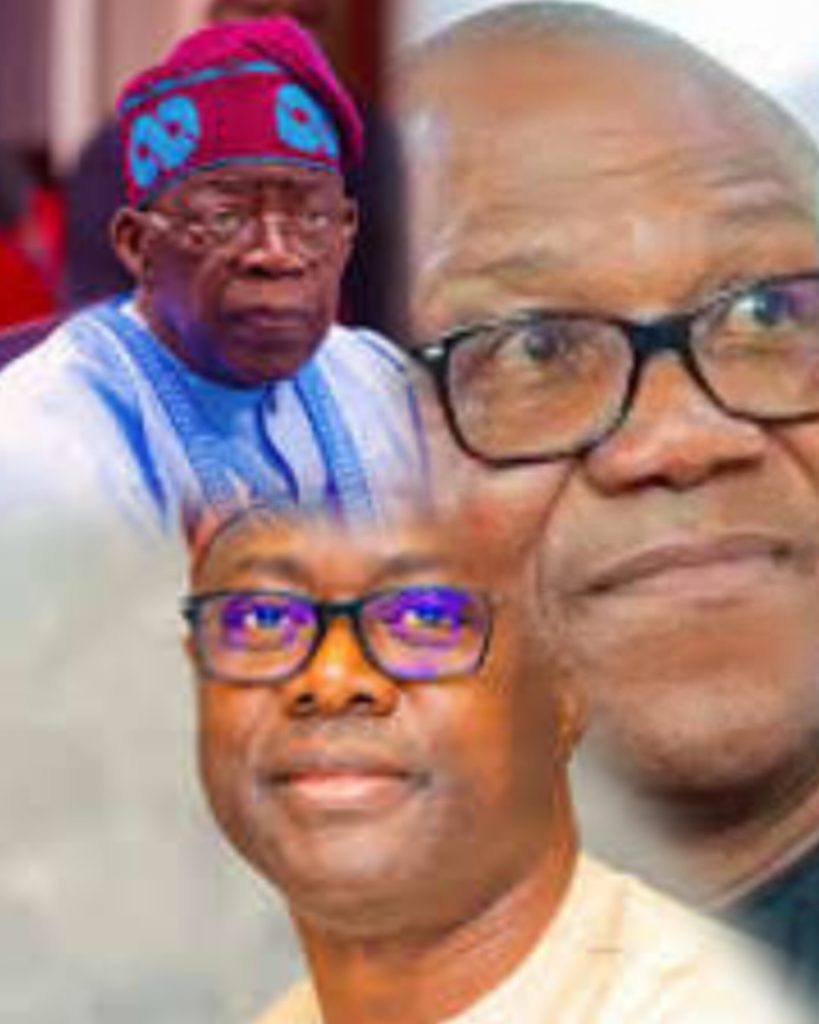
A social media post highlighting Labour Party presidential candidate in the 2023 election, Peter Obi’s comments on the recent security incident in Oyo State has triggered intense debate online, with Nigerians sharply divided over whether President Bola Tinubu should have personally called Governor Seyi Makinde following the incident.
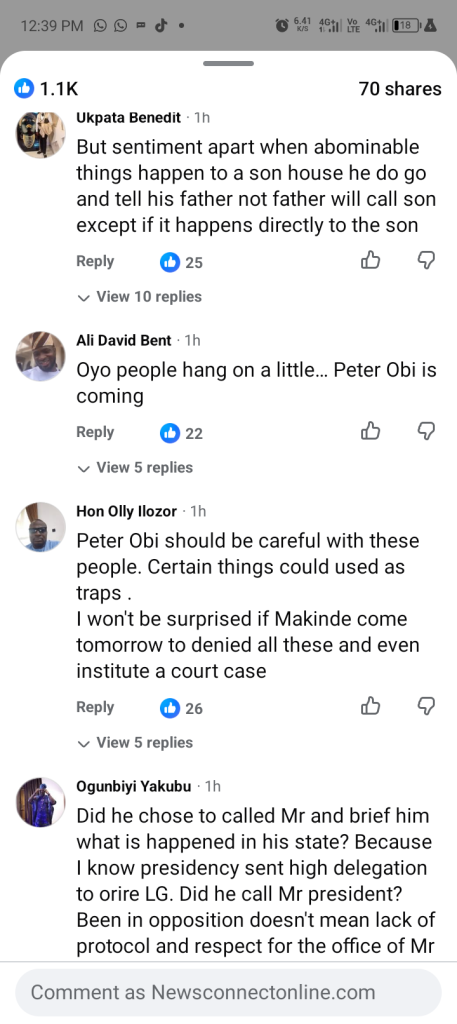
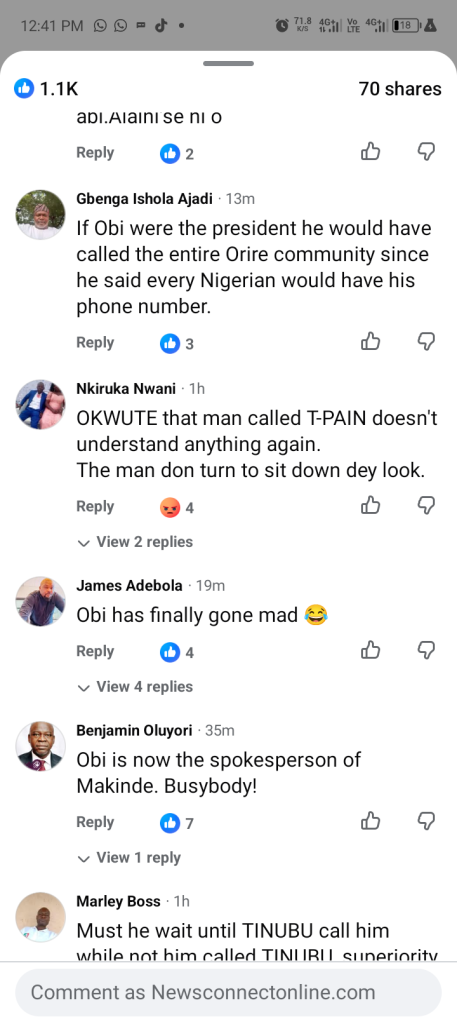
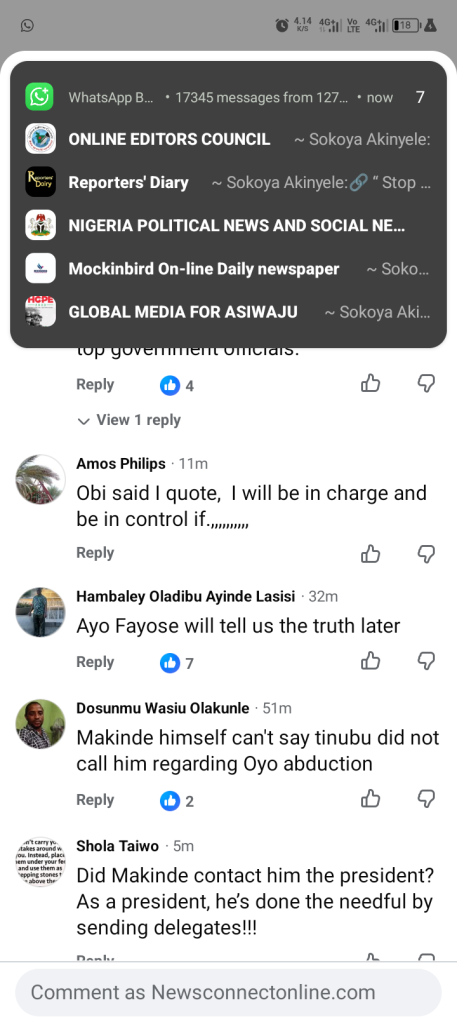
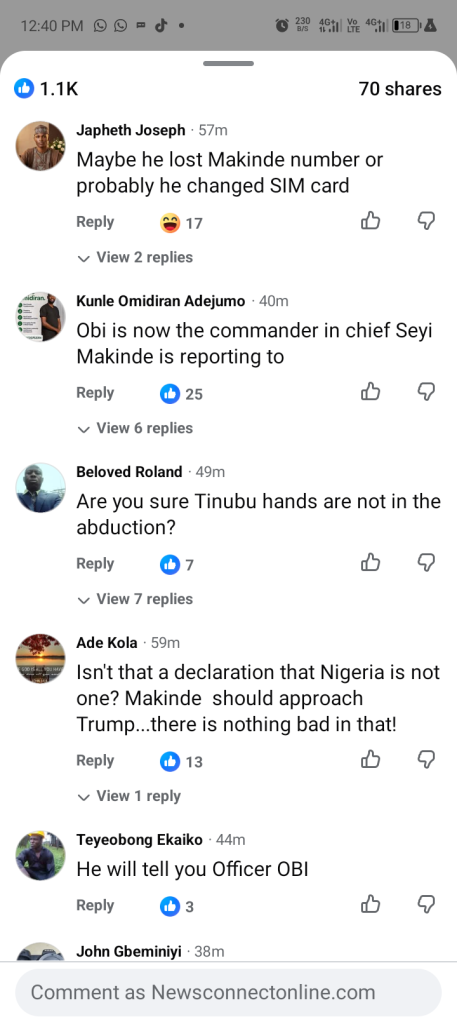
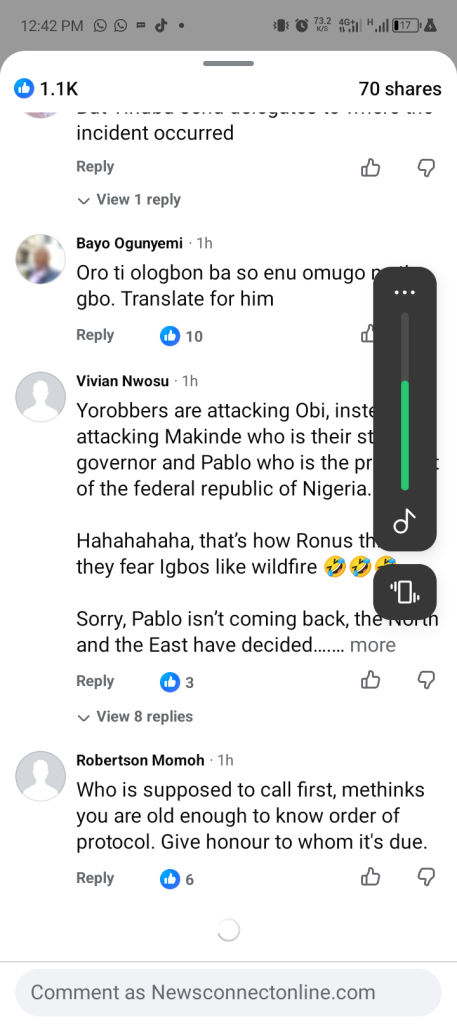
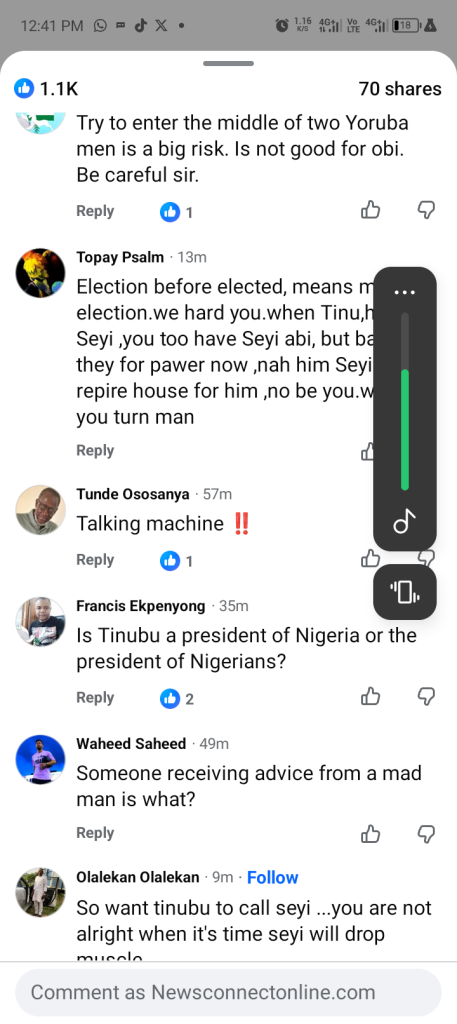
The discussion, which generated about 1,100 reactions, 70 shares and numerous comments on Facebook, centred on the role of the President during a major security crisis and the appropriate protocol for communication between the Presidency and a state governor.
Many commenters argued that President Tinubu should have personally reached out to Governor Makinde to express concern and solidarity over the security situation, maintaining that such a gesture reflects leadership and empathy during periods of crisis.
Some questioned why the governor should be expected to initiate contact with the President.
Others, however, defended the President’s handling of the situation, insisting that protocol requires the governor to brief the President first.
They also pointed out that the Federal Government had already responded by sending a high-level delegation, describing that as an appropriate presidential action.
Peter Obi’s comments also divided opinion. Supporters praised his remarks, arguing that he was highlighting the need for compassionate leadership and suggesting he would have acted differently if he were President.
Critics, however, accused Obi of interfering in matters outside his responsibility, with some describing him as acting like Governor Makinde’s spokesperson. Others argued that he should refrain from commenting on issues involving the Presidency and state government.
The debate also took a partisan turn, as supporters of Tinubu, Obi and Makinde traded political jabs, with some comments focusing on governance, leadership style and expectations ahead of future elections.
While a number of contributors called for respect for constitutional protocol and the office of the President, others used the platform to express broader political frustrations. The conversation also featured unverified claims, speculation, ethnic references and personal attacks, reflecting the highly polarised nature of political discourse on social media.
Overall, the online exchanges underscored the deep divisions among Nigerians over leadership expectations, presidential responsibilities during security emergencies and the conduct of political actors in times of crisis.