

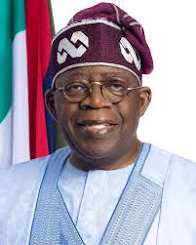
President Bola Ahmed Tinubu has declared that Nigeria will no longer rely on exporting raw cocoa beans while importing finished chocolate products, affirming that value addition will now be central to the nation’s industrial development agenda.
Newsconnect reports that the President made the announcement on Tuesday during the opening of the 2026 Cocoa Value Addition Summit in Abuja, themed “From Bean to Brand.”
Represented by the Minister of Agriculture and Food Security, Senator Abubakar Kyari, Tinubu urged Africa’s cocoa-producing countries to process a larger share of their cocoa locally to secure greater benefits from the global chocolate industry.
A major highlight of the summit was the signing of the Abuja Declaration, which established the Cocoa Value Addition Alliance comprising Nigeria, Ghana, Côte d’Ivoire and Cameroon. The four countries, responsible for nearly 75 per cent of global cocoa production, pledged closer collaboration on cocoa trade, sustainability and value addition.
The Federal Government also joined cocoa-producing states, farmers, processors and financial institutions to sign Nigeria’s National Cocoa Value Addition Accord, aimed at accelerating investments in domestic cocoa processing and manufacturing.
Tinubu observed that while Africa produces about 70 per cent of the world’s cocoa, it receives only a small share of the more than $130 billion global chocolate market, describing the situation as unacceptable.
He stressed that Nigeria must move beyond exporting raw agricultural commodities and instead focus on producing finished products that create jobs, generate wealth and stimulate industrial growth.
According to the President, over 300,000 cocoa farming families cultivate the crop across more than 1.4 million hectares in Nigeria, contributing between six and seven per cent of global cocoa production.
He noted that soaring global cocoa prices, which exceeded $10,000 per tonne at one point, generated over ₦3 trillion in export earnings and accounted for almost 25 per cent of Nigeria’s non-oil exports.
However, he lamented that most of the earnings still came from unprocessed cocoa bean exports.
“We export the bean at one price and import it back as a chocolate bar at 20 times that price. That is not trade. That is tribute, and the era of tribute is over,” Tinubu declared.
He explained that under the Renewed Hope Agenda, value addition has become a key pillar of Nigeria’s industrial policy.
The President highlighted ongoing investments, including a 70,000-tonne
processing facility in Sagamu, noting that Nigeria’s cocoa grinding capacity has now exceeded 120,000 tonnes annually.
He also announced the distribution of one million improved cocoa seedlings by the Cocoa Research Institute of Nigeria (CRIN) to boost productivity and guarantee sustainable supplies for local processors.
Tinubu further disclosed that the Bank of Industry (BoI) would provide financing for viable cocoa processing projects expected to emerge from the summit.
Calling for stronger regional cooperation, he urged Ghana, Côte d’Ivoire and Cameroon to deepen collaboration with Nigeria, saying a united approach would enhance Africa’s influence in the global cocoa market.
Earlier, the Minister of State for Industry, Trade and Investment, Senator John Owan Enoh, said Africa’s greatest challenge was not increasing cocoa production but retaining more value from it.
He explained that the summit would advance reforms through the Cocoa Value Addition Accord, dedicated financing windows, a national traceability system and stronger regional cooperation.
Enoh also cautioned that Africa must play a more active role in shaping international regulations affecting cocoa exports, including the European Union’s Deforestation Regulation, insisting the continent could no longer accept standards developed without the participation of African producers.
He announced that a Delivery Council, which he will chair, will oversee annual implementation of the Cocoa Value Addition Accord and pledged that at least 40 per cent of opportunities created under the new framework would be reserved for women and young people.
Managing Director and Chief Executive Officer of the Bank of Industry, Dr. Olasupo Olusi, said financing would be critical to transforming cocoa into a major industrial value chain.
He disclosed that the bank disbursed more than ₦164 billion to over 3,500 agro-processing businesses in 2025 and secured a €60 million European Investment Bank facility to support cocoa sector development.
Olusi said the BoI would provide long-term funding for cocoa processing plants, packaging facilities, laboratories and traceability infrastructure, while attracting additional private investment into the sector.
He also announced plans to establish Cocoa Value Addition Parks equipped with modern processing facilities, quality laboratories, reliable electricity and digital traceability systems to support both large-scale and small processors.
Meanwhile, the Chief Executive of the Ghana Cocoa Board (COCOBOD), Dr. Ransford Abbey, called for deeper cooperation among Africa’s leading cocoa-producing nations.
He noted that although Ghana, Côte d’Ivoire, Nigeria and Cameroon produce about 75 per cent of the world’s cocoa, they receive less than 10 per cent of the wealth generated by the global chocolate industry.
Abbey urged Nigeria and Cameroon to join the existing Côte d’Ivoire-Ghana cocoa initiative, saying a united four-country alliance would strengthen Africa’s bargaining power and deliver better returns for cocoa farmers.
He added that Africa must move beyond exporting raw cocoa beans by processing, branding and consuming more cocoa products locally, insisting that the continent deserves equity, not charity, in the global cocoa value chain.