

Why the VAPP Act Matters More Than Ever
More than half of Nigerians have never heard of the single most comprehensive law designed to protect them from violence. A national survey by Invictus Africa, published in May 2025 and covering over 11,500 respondents across 35 states, found that 50.7% of the population is entirely unaware that the Violence Against Persons (Prohibition) Act even exists.Among those who have heard of it, only 29% understand what it actually says.
This is not merely a statistical curiosity; it is a crisis of public knowledge with life-and-death consequences.
The VAPP Act, signed into law by President Goodluck Jonathan on 25 May 2015, represents Nigeria’s most ambitious legislative response to gender-based violence, domestic abuse, and a range of harmful practices that affect millions.
Yet a decade after its passage, the law remains a ghost statute for the very people it was written to protect. And in the space left by that ignorance, social media has become both a battleground and a courtroom, where arguments about violence, justice, and accountability rage without any shared understanding of the legal framework that should anchor them.
What the VAPP Act Actually Covers
The Act goes far beyond what most Nigerians assume. It is not simply a “rape law” or a “women’s law,” though these mischaracterisations dominate online discourse.
The VAPP Act criminalises an extensive range of offences: rape (with a broadened definition that, notably, recognises male victims for the first time in Nigerian federal law), physical assault, emotional and psychological abuse, forced financial dependence, stalking, harmful widowhood practices, forced marriage, female genital mutilation, and the abandonment of spouses and children.
Crucially, the Act provides for protection orders, a mechanism that allows survivors to obtain court-ordered restrictions against their abusers.
It mandates compensation for victims and establishes a framework for medical, psychological, and legal support through accredited service providers.
It is a law that was designed not merely to punish perpetrators after the fact, but to prevent violence and support survivors through its aftermath.
Understanding this scope matters because every trending social media debate about violence in Nigeria, from domestic abuse to false accusations, unfolds against a legal backdrop that most participants have never read.
The Osinachi Nwachukwu CasePerhaps no case illustrates the deadly consequences of VAPP ignorance more starkly than the death of gospel singer Osinachi Nwachukwu in April 2022.
Behind her celebrated voice lay years of documented abuse by her husband, Peter Nwachukwu: physical beatings, forced financial dependence (her earnings were paid into his account), isolation from her family, and emotional torment so severe that her own children later testified to witnessing it.
The hashtag #JusticeForOsinachi swept across Nigerian social media, igniting a wave of activism against gender-based violence. What the public outrage revealed, however, was a profound disconnect. Friends, church leaders, and colleagues acknowledged after her death that they had known about the abuse.Many said they felt helpless.
Yet the VAPP Act, had it been understood and invoked, provided precisely the tools that might have intervened. Section 31 enables protection orders that can physically remove an abuser from the home.Sections 12 and 46 address the forced financial dependence that trapped Osinachi. Section 14 criminalises the emotional and psychological abuse her children described.
Peter Nwachukwu was ultimately charged under 23 counts including culpable homicide and multiple VAPP Act violations. But the case raised an uncomfortable question that remains unanswered: how many other Osinachis are suffering in silence because neither they, nor the people around them, know that the law already provides a way out?
When Social Media Becomes the Courtroom
If the Osinachi case demonstrated the cost of not knowing the VAPP Act, the Mirabel controversy of February 2026 exposed a different kind of danger: what happens when serious allegations are litigated entirely on social media, with no reference to law or due process.
The TikTok user known as Mirabel posted an emotional video alleging she had been sexually assaulted in her apartment. The claim went viral within hours, drawing sympathy, outrage, financial donations, and celebrity endorsements.
Singer Simi spoke out against sexual violence. Advocacy groups mobilised. Government agencies, including the Lagos State Domestic and Sexual Violence Agency, indicated readiness to intervene.
Then the narrative collapsed. Neighbours disputed the account. In a recorded conversation with social media commentator, Mirabel reportedly admitted the allegations were fabricated.She had created fake accounts to send herself threatening messages, and solicited donations under false pretences.
The Ogun State Police confirmed she was under investigation.The fallout was immediate and toxic. Public figures including Tacha and Etinosa Idemudia called for severe punishment. On X (formerly Twitter), thousands demanded that false accusers receive sentences equivalent to convicted rapists.
Others argued that punishing Mirabel harshly would deter genuine survivors from coming forward. The debate became a proxy war between those who see sexual violence allegations as inherently suspect and those who fear any scepticism will silence real victims.What was almost entirely absent from this social media firestorm was any reference to the actual law.
The VAPP Act, under Section 1, prescribes life imprisonment for rape. Existing criminal statutes, including Section 125 of the Criminal Code Act, already provide for the prosecution of those who give false information to authorities.These are not equivalent offences, and the law deliberately distinguishes between them for principled reasons.
But when the entire national conversation takes place on TikTok and X, these distinctions are replaced by performative outrage.A Law Under SiegeAs if public ignorance were not challenge enough, the VAPP Act has also faced a direct legislative threat.
In July 2024, Senator Jibrin Isah of the All Progressives Congress introduced a bill to repeal and re-enact the Act, arguing that it contained legislative errors and was insufficiently comprehensive.
The bill passed its second reading in the Senate and was referred to the Committee on Judiciary, Human Rights, and Legal Matters.The reaction on social media was swift. The hashtag #SaveTheVAPPA trended as Nigerians pushed back against what many perceived as a regressive move.One widely shared post on X captured the frustration: lawmakers had spent 23 years developing a law to protect people from violence, passed it after 14 years of effort, and now proposed to scrap it.
Others pointed out that the VAPP Act is the only Nigerian law with an expansive definition of rape that ensures male victims can seek justice; repealing it would harm everyone.International organisations joined the opposition.
The Malala Fund, working with Invictus Africa and Education as a Vaccine, urged the Senate to amend rather than repeal, noting that the Act had been adopted by 35 of 36 states. Human Rights Watch flagged the repeal effort in its 2025 World Report as part of a broader pattern of threats to women’s rights in Nigeria.
The repeal bill remains unresolved. But the episode exposed a paradox: a law that half the country does not know exists was simultaneously being defended by those who understand its significance and threatened by legislators who argued it was not working.
The obvious rejoinder, that a law cannot work if it is neither known nor properly enforced, was made forcefully by civil society organisations who argued that strengthening implementation, not repeal, was the appropriate response.
The Awareness Gap Is a Protection Gap
The Invictus Africa survey data reveals who is most exposed by this ignorance. Rural residents are significantly less likely to know the law (42.9%) than urban residents (54%).
Individuals without formal education have an awareness rate of just 23.8%, compared to 60.6% among postgraduates.The self-employed, students, and unemployed populations, precisely those most vulnerable to exploitation, show awareness rates below 47%. Forensic services, which are essential for prosecution, are consistently available in only eight states.
The enforcement picture is equally concerning. NAPTIP, the agency responsible for implementing the VAPP Act in the Federal Capital Territory, has secured 36 convictions (including two life sentences) from over 3,000 reported cases.
Legal aid is actively available in only 18 states. Reintegration services exist in just 15.The law may be ambitious on paper, but its reach on the ground remains alarmingly narrow.What Needs to ChangeThe VAPP Act does not need to be repealed. It needs to be known.
Every social media argument about rape, about domestic violence, about false accusations, about what justice means in Nigeria, is impoverished by the fact that most participants have never encountered the legal framework that governs these questions.
Three things must happen. First, public awareness campaigns must move beyond the institutional press releases that currently reach only the already-informed. The law must be translated, literally and figuratively, into languages and formats that reach market traders, students, rural communities, and the millions who encounter these issues first on their phone screens.
Second, enforcement infrastructure must be resourced to match the law’s ambitions. Forensic services, legal aid, and survivor support cannot remain confined to a handful of states.
Third, social media platforms, which now function as the primary arena for national conversations about violence and justice, must be treated as spaces where legal literacy matters. Influencers, advocates, and commentators who shape public opinion bear a responsibility to engage with the law as it exists, not merely with the emotions that individual cases provoke.
Osinachi Nwachukwu might still be alive if the people around her had known how to invoke the VAPP Act. The Mirabel controversy might have unfolded with less damage to genuine survivors if participants had understood what the law actually says about both sexual violence and false allegations.
The repeal debate might never have gained traction if half the country were not unaware of what was being taken from them.The VAPP Act is a good law. It is also, for millions of Nigerians, an invisible one.
That invisibility is the problem that every institution, every advocate, and every citizen with a social media account has the power to change.
Bridging the Gap:
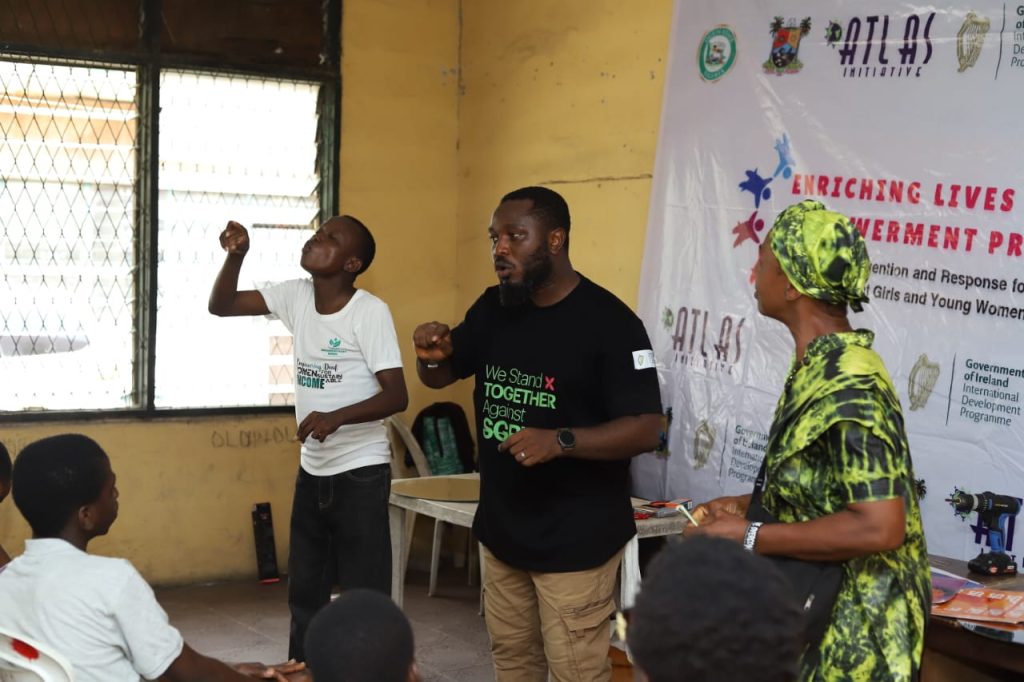
ATLAS Initiative and the ELiTE ProjectOne organisation translating this urgency into grassroots action is ATLAS Initiative (Access to Learning and School), a Nigerian nonprofit whose Enriching Lives Through Empowerment (ELiTE) project is working directly in the communities where the VAPP Act’s absence is felt most acutely.
Supported by Irish Aid, ELiTE is a humanitarian protection project targeting 200 vulnerable adolescent girls and young women aged 15 to 25 living in urban slum communities across Lagos and Ogun States, specifically in Ikorodu, Ijora, Ojodu Abiodun, and Ogijo.
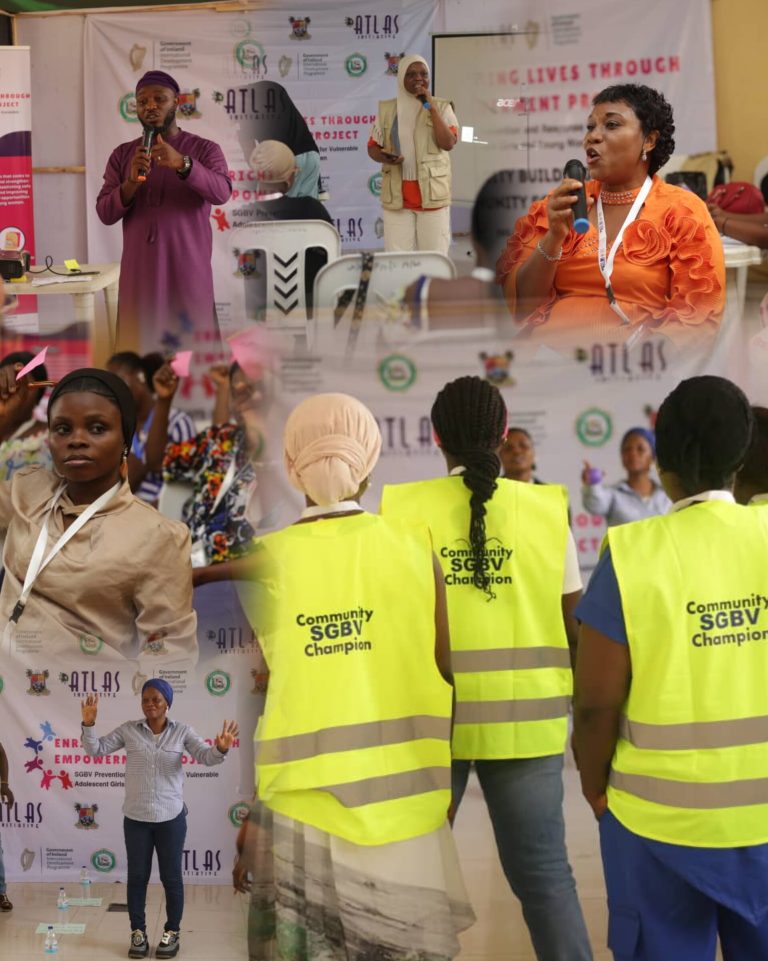
The project adopts a holistic approach to sexual and gender-based violence prevention and response: it has established four safe spaces in these communities, trained 20 community champions who serve as intermediaries between survivors and formal referral pathways, and provides psychosocial support, mobile counselling services, legal aid referrals, and dignity kit distribution.
Critically, these community champions are being equipped with knowledge of Nigeria’s legal and policy frameworks governing SGBV, including the VAPP Act itself, so that cases in their communities are properly identified, referred, and addressed.As ATLAS Initiative’s Co-founder and Executive Director, Habeeb Balogun, has emphasised, the training represents a deliberate effort to strengthen community-based support systems and ensure timely responses to violence where institutional infrastructure remains weakest.
The ELiTE project is a model of what the data demands: awareness campaigns that reach beyond press conferences and policy documents into the lived realities of the communities most at risk, closing the distance between what the law promises and what survivors actually experience.