

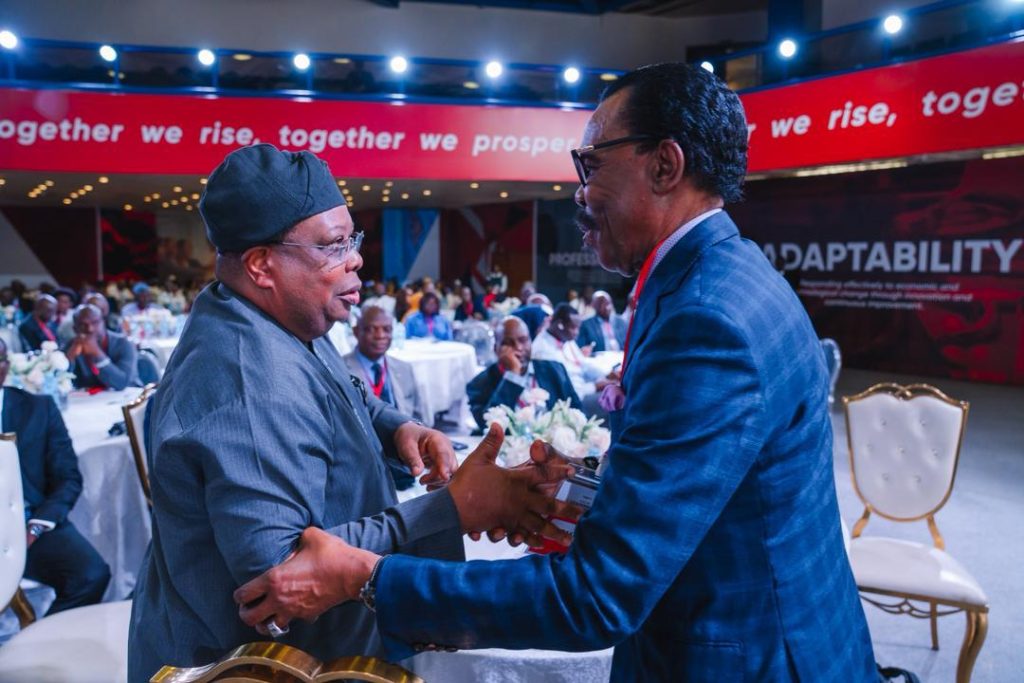
Chairman of the National Tax Policy Implementation Committee (NTPIC), Joseph Tegbe, has issued a strong warning that Nigeria’s newly enacted tax reform laws will amount to little without disciplined and credible execution.
Speaking at the 2026 Leadership Retreat of the Nigeria Revenue Service (NRS), Newsconnect reports that Tegbe made it clear that while the country has taken bold legislative steps, the real test lies ahead.
According to him, the future of Nigeria’s fiscal stability now depends not on how ambitious the tax laws are, but on how effectively they are implemented.
He noted that Nigeria continues to record one of the lowest tax-to-GDP ratios among major economies — a reality that limits government spending capacity and leaves the nation heavily exposed to oil price volatility. With growing public expenditure demands and increasing economic uncertainty, Tegbe stressed that strong institutional performance is now critical to building fiscal resilience.
Describing the passage of four new tax laws as only the starting point, Tegbe characterized the reform as a fundamental restructuring of Nigeria’s fiscal system — not just another policy update. “The credibility of implementation, not the elegance of legislation, will define success,” he emphasized.
He explained that the NRS serves as the country’s “Revenue System Integrator,” meaning outcomes will depend on how well the entire ecosystem works together — from policy clarity and consistent enforcement to digital infrastructure, efficient dispute resolution, and coordination across all tiers of government.
Tegbe also stressed that tax policy must function as a tool for effective governance. For the reform to succeed, he said, it must be simple, fair, predictable, and scalable. These qualities encourage voluntary compliance, reduce friction for businesses, and strengthen investor confidence.
He cautioned against policy inconsistencies and sudden changes, warning that ad-hoc adjustments could erode trust, disrupt businesses, and weaken investment appetite. Investors, he said, thrive on predictable rules — not shifting directives. To maintain credibility, reforms must follow a clear sequence, include structured transition plans, and ensure continuous feedback between policymakers and administrators.
Beyond legislation, Tegbe called for a whole-of-government approach to revenue reform. Sustainable gains, he argued, require strong taxpayer identification systems, integrated financial data platforms, harmonized coordination between federal and subnational authorities, and efficient dispute resolution mechanisms. Such alignment would reduce revenue leakages, eliminate multiple taxation, and boost confidence in the system.
Importantly, he urged stakeholders to redefine how reform success is measured. Rather than focusing solely on revenue figures, he said true progress should reflect higher voluntary compliance rates, lower administrative costs, fewer disputes, quicker resolution timelines, and stronger taxpayer trust.
“Sustainable revenue performance is built on trust and efficiency — not enforcement intensity,” Tegbe concluded, underscoring that legitimacy and predictability are far more powerful than punitive measures.
With the legal framework now in place, Nigeria’s tax reform journey has entered its most decisive phase — execution.
Tegbe stressed that consistency, coherence, and disciplined implementation will determine whether the reform delivers lasting fiscal stability or falls short of its promise.
In his view, execution discipline is now the single most critical factor shaping Nigeria’s fiscal future.