

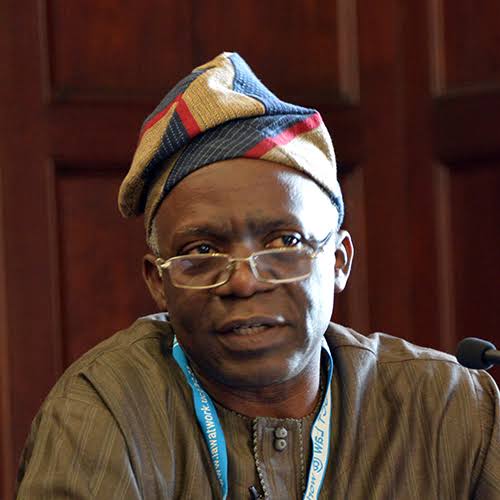
Meta Platforms Inc. has filed an appeal against a Lagos State High Court judgment that awarded $25,000 in damages to human rights lawyer and Senior Advocate of Nigeria (SAN), Femi Falana, over a controversial video publication.
The appeal, dated April 10, stems from the ruling in Suit No. LD/18843MFHR/2025, where Justice O. A. Oresanya held that the video in question violated Falana’s fundamental rights.
Dissatisfied with the decision, Meta—through its legal team led by Mofesomo Tayo-Oyetibo—has asked the appellate court to overturn the judgment in its entirety.
Central to Meta’s argument is a dispute over jurisdiction. The company contends that the case was wrongly instituted under the Fundamental Rights (Enforcement Procedure) Rules instead of being pursued as a defamation claim.
According to Meta, the allegations border on reputational damage from false publication, which falls outside the scope of constitutional rights enforcement.
The tech giant further argued that the trial court overstepped its authority by assuming jurisdiction it did not possess.
On liability, Meta rejected the court’s reliance on the doctrine of undisclosed principal, insisting there was no evidence of any principal-agent relationship between it and the publisher of the video, AfriCare Health Centre.
It maintained that the content was independently created and posted by a third party, with no involvement or control from Meta.
Meta also challenged the finding that it breached the Nigeria Data Protection Act, arguing it was wrongly classified as a data controller. The company said there was no proof that it determined how or why the personal data in question was processed.
Describing the $25,000 damages awarded to Falana as “unjustified,” Meta urged the appellate court to set aside the ruling.
Additionally, the company alleged a breach of fair hearing, claiming the trial judge raised issues independently without giving both parties the opportunity to address them, and failed to consider key aspects of its defence.
The case is now poised to become a significant legal test on the extent of social media platforms’ responsibility for third-party content and the proper boundaries of rights enforcement in Nigeria.
Culled from The Cable.ng