

By Abayomi Elias
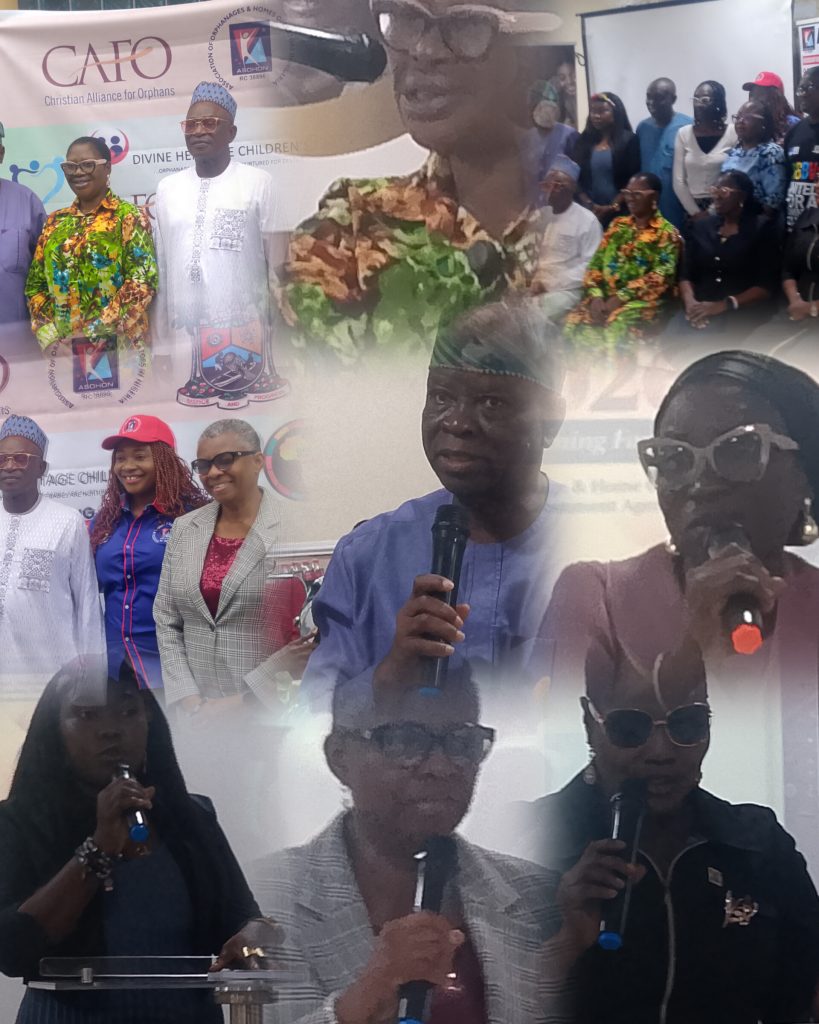
The Christian Alliance for Orphans, in partnership with the Association of Orphanage Homes Operators in Nigeria (ASOHON), has organised a 2 day strategic meeting for caregivers, orphanage and home operators, Child protection practitioners, faith leaders, government agencies and NGOs tagged Collaborate+ 2026, calling for stronger collaboration to improve child protection and strengthen families.
Newsconnect online reports that the programme theme was dubbed “Empowering Caregivers and Strengthening Families through Collaboration for Child Protection.”
Speaking at the event, the Lagos State Chairman of ASOHON, Alhaji Ganiyu Olayiwola Dosunmu, highlighted the financial and healthcare challenges confronting orphanage homes, particularly when children under their care require emergency medical treatment.
Dosunmu said the Lagos State Health Management Scheme (LASHMA) was helpful to orphanage homes at its inception but had become less effective for them.
He appealed to the government to take a greater percentage of healthcare expenses, noting that the financial burden on orphanage operators can be overwhelming.
He cited a situation where a home took in a child who began bleeding three days later, forcing the home to spend about ₦1 million on treatment before the child eventually died.
According to him, even efforts to conduct an autopsy can run into millions of naira, raising questions about how orphanage homes are expected to meet such expenses.
He acknowledged government efforts but appealed for greater compassion and practical support for operators of orphanage homes.
Also speaking, Mrs Shogbesan Adeola, who represented the Permanent Secretary and Commissioner for Health, Lagos State Ministry of Health, said the theme was timely and significant because child protection requires a whole-of-society approach.
She said parents, caregivers, operators of homes and other stakeholders all have important roles to play in protecting children.
Adeola commended the organisers for bringing stakeholders together to discuss practical strategies for strengthening the child protection system in Lagos State.
She noted that children remain vulnerable to sexual abuse and other forms of violence, while some families face social and economic pressures that affect their ability to provide adequate care and protection.
She called for support, guidance, counselling and referrals where families experience difficulties.
The ministry representative also stressed the importance of strengthening the capacity of health workers to identify, document and manage cases involving vulnerable children and make appropriate referrals.
She urged stakeholders to move beyond responding to cases of abuse and focus more on preventing violence by investing in caregivers, strengthening families and improving child protection systems.
She also identified the limited workforce in the health sector as a challenge, citing the departure of trained health professionals from Nigeria to work abroad.
NAPTIP: Orphanages Should Be a Bridge to Family Care
The NAPTIP Zonal Commander, Comfort Agboko, a keynote speaker said the theme of the programme should be viewed as a call to rethink how child protection is approached and what success should mean for every child.
Agboko noted that Nigeria has one of the largest child populations in the world and consequently faces significant child protection challenges involving children who are orphaned, abandoned, displaced by conflict and climate shocks, separated from families by poverty or exposed to abuse and exploitation.
She said orphanages and homes have played an important role but stressed that, where possible, institutional care should serve as a bridge to a safe family environment, supported caregiver, united home, foster care or reintegration.
According to her, operators of orphanages and homes should become professional partners in a broader child protection system that includes prevention, family support, kinship placement, foster care and reintegration, with residential care used when genuinely necessary.
Agboko also emphasised the importance of empowering caregivers, including housekeepers, matrons, social workers and community volunteers, describing them as the human infrastructure of child protection.
She called for structured training and certification in child development, trauma-informed care, positive discipline and safeguarding, as well as fair remuneration and defined career paths to ensure caregiving is treated as a profession rather than charity work.
Education Ministry Seeks Stronger Support for Caregivers
The Director of Education District 6, Lagos State Ministry of Education, Adu Mojisola who represented the Permanent Secretary and the commissioner said every child deserves a safe, loving, nurturing and supportive environment in which to grow and thrive.
She said caregivers require the right knowledge, skills, resources, guidance and support to provide safe and nurturing care.
According to her, when caregivers are empowered, families become stronger and children are better protected.
Mojisola said child welfare should go beyond providing food, shelter, education and material support, stressing the need to protect children from abuse, neglect, exploitation, violence and other forms of harm.
She identified stress, economic strain and isolation as some of the challenges that can affect caregivers and families, calling for greater emphasis on prevention, mental health support, education and economic stability.
Orphanage Operators Demand Clarity on Free Healthcare for Children
A representative of the Christian Alliance for Orphans also raised concerns over healthcare access for children in orphanage homes.
Following the presentation by the Lagos State Ministry of Health representative, the participant asked whether there could be a proper collaboration between the ministry and orphanage operators.
He sought clarification on the reported Lagos State policy that children under 12 years should receive healthcare free of charge, noting that orphanage homes are sometimes asked by hospitals to purchase medications for children in their care.
He said the situation had become a major concern for operators, adding that social workers from the Ministry of Youth and Social Development stationed at some hospitals sometimes intervene and ask hospitals to be lenient with orphanage homes.
However, he said that where such social workers are unavailable, homes are often left to pay the full medical bills despite being part of the same child protection system.
MYSD Raises Concerns Over Staffing, Security in Homes
Representing the Permanent Secretary of the Ministry of Youth and Social Development, Mrs Toyin Osanyitolu, Mrs Jinadu Muslimat Titilayo raised concerns over compliance, staffing and security in some orphanage homes.
She said some homes do not have qualified social workers and sometimes assign administrative officers to perform social work duties.
According to her, qualified social workers are important because they may be required to represent the interests of children during court proceedings.
She also called for security personnel and CCTV cameras in homes, noting that CCTV can help operators monitor activities even when founders are not physically present.
Titilayo raised concerns about situations where caregivers leave facilities to perform errands and children are left without adequate supervision.
She further said some caregivers perform multiple duties, including cleaning, cooking and administrative work, while in some facilities children participate in cooking and need proper supervision when doing so.
She urged operators to comply with the operational guidelines, noting that some homes had been suspended while others had been closed for violating established guidelines.
She also observed that some caregivers are overwhelmed when the number of children in a facility is too large for the available workforce.
Church Offers Partnership on Children’s Spiritual Development
Also speaking, Dr Mrs Foluke Ola of the Nigeria Baptist Church expressed the church’s willingness to partner with orphanage operators on the spiritual development of children.
She highlighted discipleship and mentorship as important areas of partnership and urged operators to take the spiritual development of children seriously.
She noted that the children being raised and supported today would become professionals and leaders who would contribute to Nigeria’s future.
Mrs Oguntoyinbo, who represented the Executive Secretary of the Domestic and Sexual Violence Agency, Titilola Vivour, commended orphanage homes and operators for their efforts in caring for vulnerable children.
Amb. Aderonke Oyelakin the Chairman of CAFO COLLABORATE + LAGOS 2026 on behalf of the organisation said they look forward to applying all that they learnt from CAFO to better together improve the care and wellbeing of vulnerable children in Lagos state and across the nation at large.
Aderonke said a communique will be shared across the MDAs after the conference and we look forward to the implementation of the areas for improvement.
Participant Calls for NAPTIP Presence in Rural Communities
A participant at the event also appealed to NAPTIP to extend its operations to rural communities to strengthen efforts against child trafficking and the exploitation of vulnerable children.
The discussions at Collaborate+ 2026 consequently focused on stronger partnerships among government agencies, orphanage operators, caregivers, families, health professionals, faith-based organisations and other stakeholders as a means of improving child protection and creating safer environments for children.