

By Abayomi Elias
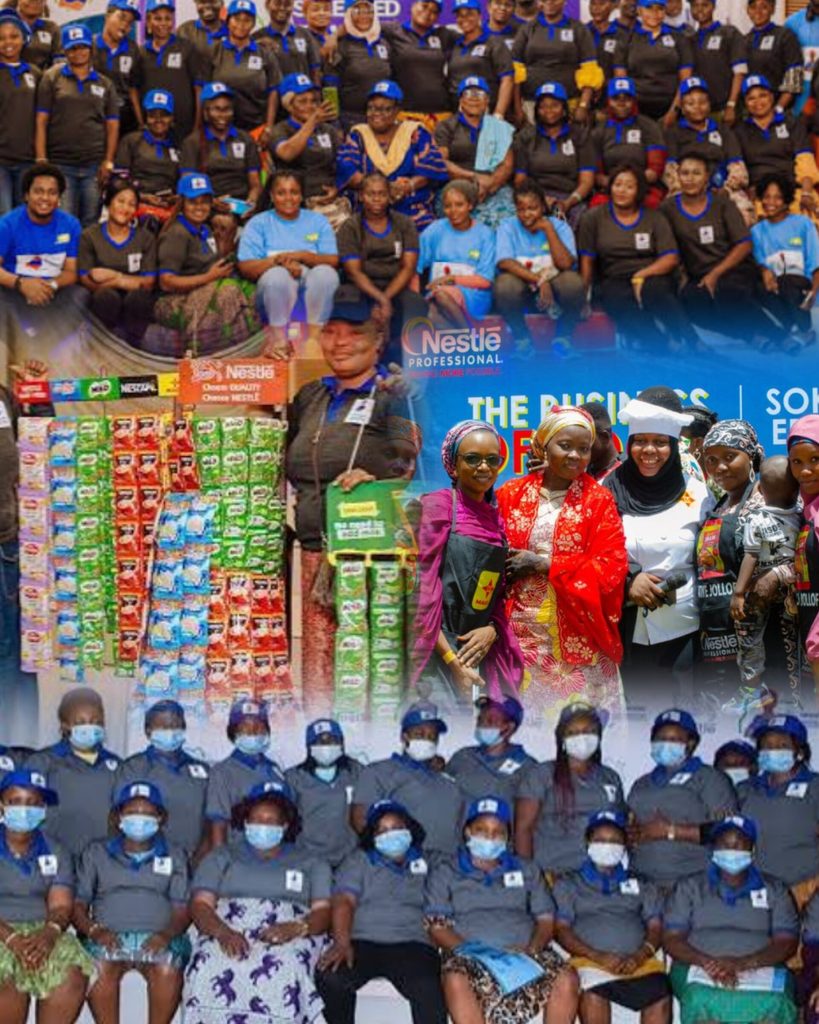
For rural women running small businesses in Nigeria, empowerment means more than attending a training session or receiving a business grant. It means having the resources, knowledge, market access and financial capacity to build an enterprise that can survive beyond the intervention—and, ultimately, give women greater control over their economic lives.
That raises a fundamental question about women-focused economic empowerment programmes: what happens after the training ends?
Are women earning more? Are their businesses becoming more resilient? Are they gaining greater control over income and business decisions? And can improvements in women’s economic position translate into better outcomes for their families and communities?
These questions are particularly important in Nigeria, where women play a significant role in agriculture, food distribution, retail and other parts of the economy but continue to encounter barriers to finance, productive resources, markets and business opportunities.
The global evidence shows that the issue is much larger than Nigeria.
The Food and Agriculture Organization of the United Nations (FAO), in its Status of Women in Agrifood Systems report published in 2023, found that women who manage farms produce 24 percent less per unit of land than men managing farms of comparable size.
The statistic, however, should not be interpreted as evidence that women are inherently less productive. FAO points to differences in access to productive resources, services and opportunities as important factors behind the gap.
FAO also estimated that closing gender gaps in employment and wages across agrifood systems could increase global GDP by nearly US$1 trillion and reduce the number of food-insecure people globally by 45 million.
Importantly, those estimates relate to closing gender gaps across agrifood systems globally.
From 50 women to 482
According to Nestlé Nigeria, the rural women empowerment initiative was launched in 2021 to support women retailers within its value chain who have the ambition to expand their businesses but face constraints including limited access to business training, mentorship and resources.
The programme began with 50 women retailers in communities around Abuja.
By the 2025 Agbara edition, Nestlé said the programme had expanded to nine locations. Following its 10th edition in Zaria, Kaduna State, in 2026, the company reported that 482 women entrepreneurs had been reached across ten editions.
The latest Zaria edition supported 50 women.
But the number reached is only the starting point.
The more important question is whether those 482 women experienced meaningful economic change.
What does the intervention provide?
Nestlé says the programme combines business-management training, mentorship and product grants.
The women receive training in areas including bookkeeping, merchandising, stock management, financial management and customer service.
They also receive Nestlé products as grants, with the value of the products set at three times the participants’ existing stock.
The intervention is followed by three months of mentorship.
Nestlé says the mentorship is designed to help participants manage the additional inventory, apply the business skills acquired during training and reinvest in their businesses.
The programme therefore goes beyond a one-day training model. Its stated objective is to combine knowledge with productive resources and continued support.
There is also a commercial dimension.
According to Nestlé, women account for approximately 60 percent of retailers in its Nigerian retail network.
This makes the women important not only to their families and communities but also to Nestlé’s own distribution and retail ecosystem.
That creates what the company describes as a Creating Shared Value approach: women benefit from stronger businesses and livelihoods, while Nestlé benefits from a stronger retail network and increased business activity.
That relationship is worth examining because it raises a broader public-interest question: Can a programme simultaneously advance women’s economic empowerment and strengthen a company’s commercial interests?
The answer does not have to be either/or. But its social impact needs to be measured independently from its commercial benefit.
Beyond the number trained.
Nestlé reports encouraging results.
According to the company’s programme monitoring, more than 80 percent of women from previous cohorts have sustained and grown their businesses beyond the initial stock support.
The company says participants have recorded larger inventories, higher turnover, more customers and stronger financial and business-management practices.
Earlier programme records also showed that more than 60 percent of beneficiaries at that stage achieved the programme’s stated 300 percent business-growth target during the three-month mentorship period.
For the 2026 Zaria cohort, Nestlé says participants had already recorded more than 250 percent business growth based on the company’s monitoring.
These figures suggest that the intervention may be producing changes beyond participation in training.
But they also require careful interpretation.
A percentage increase in business growth does not automatically tell us how much a woman’s personal income increased, whether household welfare improved, whether she gained greater control over the additional income or whether the business growth remained sustainable after the programme’s intensive support ended.
Those are different measures of empowerment.
The evidence—and its limitation
Nestlé says participants are selected from its existing network of retailers in target communities.
Because the women already operate within the company’s retail network, Nestlé says it has access to historical sales records that can provide a baseline for assessing business performance.
The company also continues to engage with participants after the initial intervention, while the three-month mentorship period provides more intensive monitoring.
For the 2026 Zaria cohort, Nestlé says results were assessed against historical sales records.
This provides an important form of business-performance evidence.
However, there is a significant distinction that should not be overlooked.
Nestlé’s reported findings are based on its internal business-performance monitoring. They are not presented as the findings of an independent impact evaluation.
The company confirmed that details of any independent assessment or longer-term study would need to be established before being presented as such.
That does not invalidate the company’s figures.
Rather, it establishes their appropriate context.
An independent evaluation could potentially answer questions that internal sales monitoring alone cannot fully resolve: whether the changes were caused by the programme, how participants compare with similar women who did not participate, whether benefits persisted after the intervention and whether economic gains translated into broader improvements in household welfare and women’s decision-making power.
Listen to the women
For a programme designed around women’s economic empowerment, the women’s own voices are indispensable.
Nestlé has indicated that it is willing to explore interviews with beneficiaries, subject to their consent.
That creates an opportunity to move the story beyond corporate statistics.
A woman who can say, for example, that her stock increased, her monthly turnover rose, she employed another person, paid school fees from business income or gained greater control over household financial decisions provides a much richer picture of empowerment than a participation figure alone.
At the same time, journalists should seek mixed outcomes, not only success stories.
Were there women whose businesses did not grow?
Did some struggle to sell the additional stock?
Did inflation, weak purchasing power, transportation costs or competition erode their gains?
Did any participant leave the programme or return to her previous level of business activity?
Those voices matter because an empowerment programme should be judged not only by its strongest performers but also by what happens to participants who encounter the barriers that training alone cannot remove.
The bigger Nigerian problem
The experience of these women must also be viewed against Nigeria’s wider economic reality.
Business training cannot, by itself, resolve structural constraints such as limited access to affordable finance, insecure property rights, inadequate infrastructure, digital exclusion, market instability, unpaid care responsibilities and limited access to productive assets.
This is particularly relevant when discussing rural women.
A woman may know how to keep financial records but lack affordable credit.
She may know how to manage inventory but operate in a community where purchasing power is weak.
She may receive additional products but face high transportation costs or unreliable electricity.
She may increase her turnover but still have limited control over household financial decisions.
These distinctions matter because economic participation is not necessarily the same thing as economic empowerment.
From Nigeria to the global food system
The Nigerian experience also reflects a much broader global challenge.
FAO’s 2023 report makes clear that gender inequalities are embedded across agrifood systems—from access to land and finance to employment, technology, markets and decision-making.
Closing these gaps has consequences beyond individual women.
If women can gain equitable access to productive resources and economic opportunities, the benefits can extend to households, communities and food systems.
This is why FAO’s estimate that closing gender gaps across agrifood systems could increase global GDP by nearly US$1 trillion and reduce global food insecurity by 45 million people is significant.
The figures demonstrate the scale of the economic opportunity represented by gender equality.
But they should not be used to claim that one corporate programme can deliver those global outcomes.
Rather, they provide the wider context in which initiatives such as Nestlé’s can be assessed.
What does real empowerment look like?
The Nestlé initiative offers an important case study because it combines three elements that women-owned businesses frequently need: skills, productive resources and mentorship.
The programme’s reported results also raise encouraging questions about whether targeted support can help women expand existing businesses.
Yet the unanswered questions are equally important.
Are the gains sustained five or ten years later?
Do women retain greater control over their increased earnings?
Are additional jobs being created?
Does increased business activity improve household nutrition and food security?
Are women moving from survival-level businesses to enterprises with greater resilience and bargaining power?
And can the model be replicated without the commercial relationship with Nestlé
Answering those questions would provide a much stronger measure of empowerment than counting the number of women trained.
Lessons beyond Nestlé
For policymakers, the lesson is that women’s economic empowerment requires more than short-term interventions. Public policies must address the structural barriers that prevent women from turning skills into sustainable enterprises.
For businesses, the lesson is that corporate social investment can potentially generate greater impact when training is combined with productive resources, mentorship, market access and measurable follow-up.
For communities, supporting women-owned businesses means recognising that the benefits can extend beyond individual entrepreneurs to households, employees, consumers and local economies.
And for women seeking economic opportunities, the experience reinforces the importance of combining skills development with access to finance, markets, networks and sustained business support.
Nestlé’s Empowering Rural Women Initiative has reached 482 women since its launch in 2021, according to the company. Its internal monitoring reports encouraging business-growth figures, including more than 80 percent of previous participants sustaining and growing their businesses.
Those numbers matter.
But the deeper measure of success lies beyond them.
The real test is whether a woman who enters a programme leaves with greater and lasting economic agency—the ability to earn, own, invest, make decisions, withstand shocks and create opportunities for herself and others.
That is the standard by which rural women’s empowerment should ultimately be judged.
And it is a standard that extends far beyond Nestlé.