

By Mary Udoh For Vision Spring Initiatives
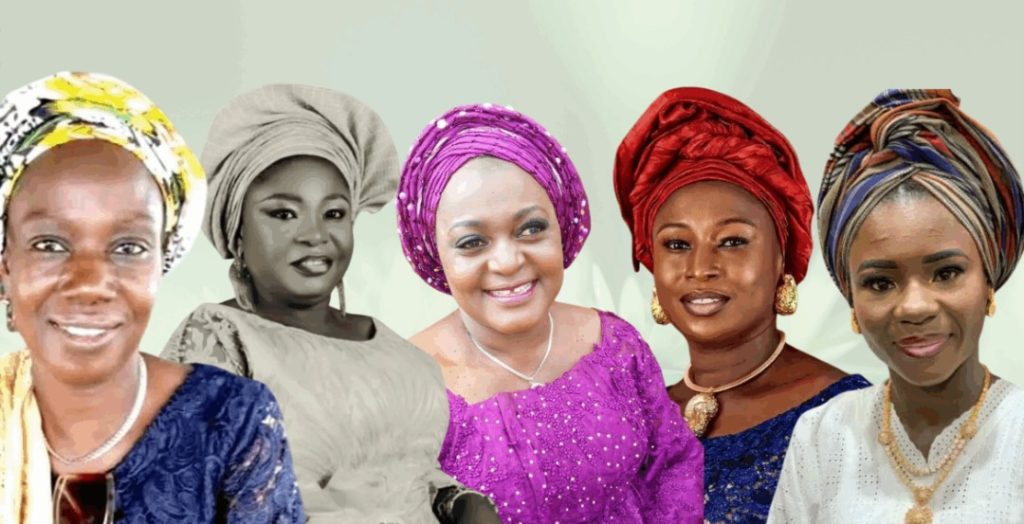
In three months, post council inauguration, Lagos State has mourned the deaths of five female local government officials of it.
Their names; Oluwakemi Rufai(Councillor for Ward C1, Ibeju-Lekki Local Government), Zainab Shotayo(Councillor for Ward C, Odiolowo-Ojuwoye Local Council Development Area), Princess Oluremi Nutayi Ajose(Vice Chairman of Badagry West LCDA), Basirat Oluwakemi Mayabikan(Councillor for Ward F, Shomolu Local Government), and Adebimpe Akinola(Council Manager of Coker Aguda Local Council Development Area) have become synonymous with a disturbing question: what is happening to women in public leadership? Particularly in Lagos state.
Each of these women held a significant role within their local councils, and their deaths came abruptly, in quick succession, following the July 2025 inauguration of the newly elected councils.
On the surface, the reports are casual: “after a brief illness,” the headlines read. Yet when five women all public officials, all newly sworn in die within such a short span, the coincidence feels too heavy to ignore. Under the grief lies an unease that goes beyond health or fate.
It calls into question the environment in which women lead, the pressures they have to handle, and the structures that either protect or endanger them. It calls into question the state of our civic space.
Civic space refers to the environment that allows individuals and groups to organize, participate, and express themselves freely in public life. It is the space where citizens can engage governance, hold leaders accountable, and advocate for justice. But in Nigeria, that space has been steadily shrinking. Laws have become more restrictive; protests more policed and monitored; journalists and activists more vulnerable and at risk of arrest. For women, the risks are even higher as they face not just political hostility but the double burden of gendered expectations and systemic neglect.
The deaths of these five women cannot be removed or taken out of this broader context. They occurred in a civic environment that is increasingly unsafe, unaccountable, and unkind to those who dare to do things differently. For women in politics, especially at the local level, participation often comes with invisible costs: mental stress, overwork, intimidation, and lack of institutional care. When systems fail to protect its leaders and their well-being, when silence and fear has been made to replace accountability, and when visibility becomes a source of vulnerability, civic space shrinks and it shrinks fatally.
Consider what their absence now represents. In councils where women were already underrepresented, each loss is not only a personal tragedy but a political erasure. It widens the gender gap in leadership, weakens community representation, and reinforces the dangerous narrative that public office is an unsafe space for women. In a society where women already struggle to be seen and heard, such patterns can discourage others from stepping forward. Fear, after all, is one of the most effective tools of suppression and it thrives in silence.
A shrinking civic space does not always begin with arrests or bans. Sometimes, it begins with exhaustion, with women who break under the weight of unacknowledged labour, emotional strain, or systemic neglect. It begins with the quiet acceptance of unexplained deaths, with the normalization of fear, and with the collective decision not to ask too many questions. When that happens, democracy loses not only its voice but its conscience.
Ultimately, the story of these five women is not just about death; it is about visibility, vulnerability, and the fragility of civic participation. When women cannot occupy leadership without fear, when death and silence replace recognition and reform, the civic space itself becomes smaller, not just for women, but for everyone. The fight to expand that space must therefore be relentless. Because democracy cannot thrive in fear, and no woman should have to risk her life to serve her people.