

By Abayomi Elias
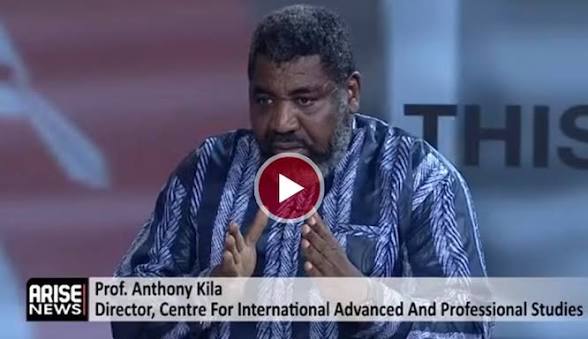
Professor Anthony Kila, Director of the Commonwealth Institute of Advanced Studies, has called for sweeping constitutional reforms to guarantee the independence of Nigeria’s judiciary, proposing that presidents should no longer appoint judges or heads of key democratic institutions.
Speaking during an interview on Arise News’ The Morning Show, Newsconnect reports that Kila argued that Nigeria’s judiciary remains vulnerable because it depends on the executive for appointments and funding. He said genuine judicial independence can only be achieved when the judiciary is financially and administratively autonomous.
According to him, many political parties worsen internal crises by taking disputes to the courts instead of resolving them through internal mechanisms, a trend he said has damaged political careers and weakened democratic institutions.
Kila described the judiciary as “weak” and lacking the institutional strength expected of an equal arm of government. He advocated constitutional reforms that would remove the power of the executive to nominate judges, insisting that no arm of government should appoint or finance another if true independence is to be achieved.
The academic also called for greater accountability within the judiciary, saying judges accused of misconduct or what senior judicial officers have described as “judicial rascality” should be investigated through fair and transparent processes and sanctioned where wrongdoing is established. He argued that consistent enforcement of consequences would strengthen public confidence in the justice system and deter misconduct.
Responding to comments by Arise News anchor Dr. Reuben Abati, who pointed to existing oversight bodies such as the National Judicial Council and Judicial Service Commissions, Kila maintained that those institutions have not responded swiftly enough to controversial judicial decisions. He said the judiciary must be more proactive in addressing allegations of misconduct to reassure the public that accountability mechanisms are working.
On the National Democratic Congress (NDC)’s ongoing legal challenge and reported openness to political alliances, Kila said pursuing the appellate process remains the appropriate legal course, while describing discussions about possible alliances as a pragmatic political contingency should the court process not produce the desired outcome.
Asked by anchor Ayo Mario-Ese how Nigeria’s institutions could be strengthened, Kila proposed a combination of constitutional, administrative and cultural reforms. He urged respected national figures, the legal profession and democratic stakeholders to work together to protect democracy and ensure that judicial institutions are not perceived as being weaponised for partisan interests.
He also recommended clear timelines for political party registration and broader reforms to the appointment process for key public offices, including the Independent National Electoral Commission (INEC), the judiciary and the Inspector-General of Police.
According to Kila, officials who rise through merit-based systems should not be appointed solely by elected political officeholders, arguing that such reforms are essential to building stronger and more independent democratic institutions in Nigeria.