

By Abayomi Elias
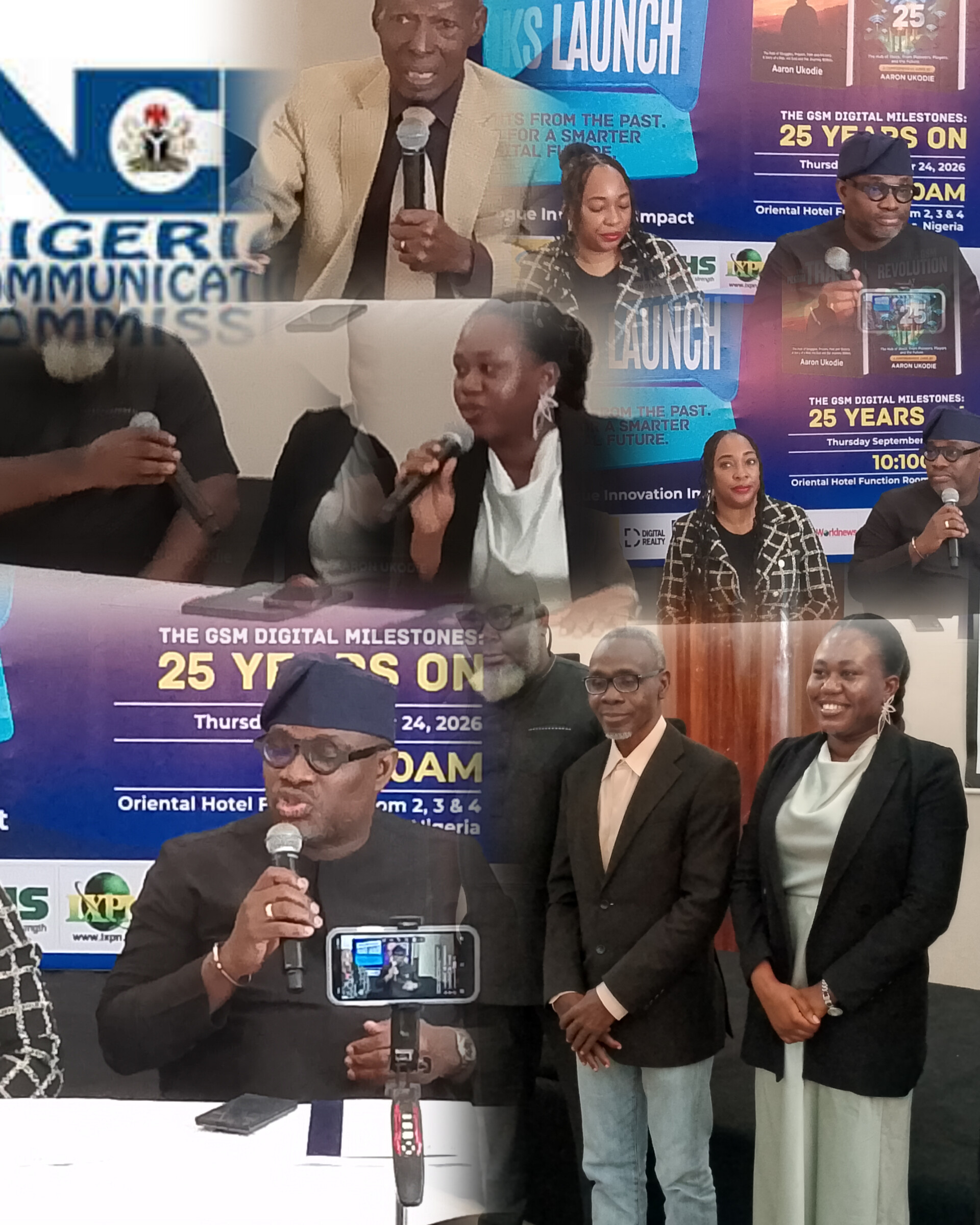
Twenty-five years after the introduction of GSM services transformed communication in Nigeria, the Nigerian Communications Commission (NCC) has called for wider broadband access, affordable connectivity and greater digital inclusion to sustain the country’s digital transformation.
Newsconnect reports that the Executive Vice-Chairman of the NCC, Dr Aminu Maida, represented by Mojisola Saraki, made the call at the 12th edition of the eWorld Forum held in Lagos with the theme, “The GSM Digital Milestones: 25 Years On.”
The forum brought together stakeholders to reflect on the impact of GSM on Nigeria’s telecommunications sector and examine emerging opportunities and challenges in the next phase of the digital economy.
Maida said the arrival of GSM fundamentally changed communication in Nigeria, where telephone access had previously been constrained by limited lines and high costs.
He noted that the expansion of mobile networks transformed telecommunications from a service largely associated with privilege into an everyday tool used by millions of Nigerians.
According to him, the revolution has gone beyond voice calls, as SMS, mobile internet and smartphones have created new channels for accessing information and digital services.
He said telecommunications now serves as a major foundation for banking, commerce, education, entertainment, entrepreneurship and other economic activities, while also supporting a growing ecosystem of telecom operators, infrastructure companies, fintech firms, technology businesses, software developers and digital platforms.
Maida, however, said the 25th anniversary should not only be about celebrating past achievements but also about addressing the challenges that will shape the sector’s future.
He identified continued investment in telecommunications infrastructure, wider broadband access, improved quality of service, affordability, cybersecurity and digital inclusion as priorities for the next phase.
The NCC chief also highlighted 5G, artificial intelligence, cloud computing and the Internet of Things as emerging technologies capable of further transforming Nigeria’s digital economy.
He stressed that the focus should increasingly shift from simply connecting Nigerians to ensuring that connectivity provides access to opportunities in education, employment, innovation, entrepreneurship and economic participation.
‘Human Mind Remains Central to Digital Communication’ — Uwaje
Speaking during a panel session, veteran ICT expert Chris Uwaje, popularly known as “The Oracle of ICT,” said the GSM revolution must also be viewed from the perspective of the human beings who create and consume digital content.
Uwaje stressed the need to develop innovative and resilient minds capable of communicating truthful and authentic information.
He said telecommunications had given Nigerians a voice and helped democratise human interaction, adding that the development of digital infrastructure must be accompanied by investment in human capacity.
GSM Has Revolutionised Every Sector — Ogunbiyi
Also speaking, Olaitan Ogunbiyi, Director of Operations at IHS, said the widespread adoption of GSM had revolutionised virtually every sector of the economy.
He identified healthcare, transportation, manufacturing and technology among sectors that have benefited from the evolution of telecommunications.
Ogunbiyi recalled that Nigeria started with 2G licences, before the introduction of 3G around 2006, which significantly improved internet speeds.
He said the sector subsequently progressed into the 4G era around 2016, alongside the growing deployment of fibre-optic infrastructure.
According to him, technology continues to evolve, with major changes occurring roughly every eight to 10 years.
Other panelists who shared their experiences on the GSM revolution included Ololade Saraki of Paradigm Initiative and journalist Mr Ken Nwobo.
eWorld Forum: From 2009 Gathering to National Technology Platform
In his welcome address, Aaron Ukodie, Publisher of eWorldnews and Convener of the eWorld Forum, said the initiative has evolved into a platform for celebrating innovation, technology, leadership and Nigeria’s transformation.
Ukodie said the journey began in 2009 at Eko Hotel, Lagos, when he hosted alumni of the University of Ife who had risen to become chief executives and leaders in Nigeria’s ICT industry.
He described the 25th anniversary celebration of GSM as an opportunity to reflect on a revolution that transformed the way Nigerians communicate, conduct business and interact socially.
He also expressed appreciation to the Nigerian Communications Commission (NCC) for its continued support and responsiveness to the initiative.
Books Document Nigeria’s GSM Journey
The event also featured the launch of “Nigeria’s GSM Revolution at 25: The Hall of Digital Pioneers and Players,” authored by Aaron Ukodie.
The book documents the development of Nigeria’s telecommunications industry and the contributions of pioneers, regulators, operators, institutions and other stakeholders.
A second book, “The Pilgrim Trail: A Journey of Faith, Purpose and Destiny,” was also launched and reviewed by Dr Uche Okoro.
The discussions at the forum highlighted how, 25 years after GSM arrived in Nigeria, mobile connectivity has evolved from primarily supporting voice calls to becoming a critical platform for data, financial services, digital businesses and economic participation.
Stakeholders at the forum emphasised that Nigeria’s next digital chapter will require deeper connectivity, wider access and stronger efforts to ensure that technological advancement translates into meaningful opportunities for citizens.