

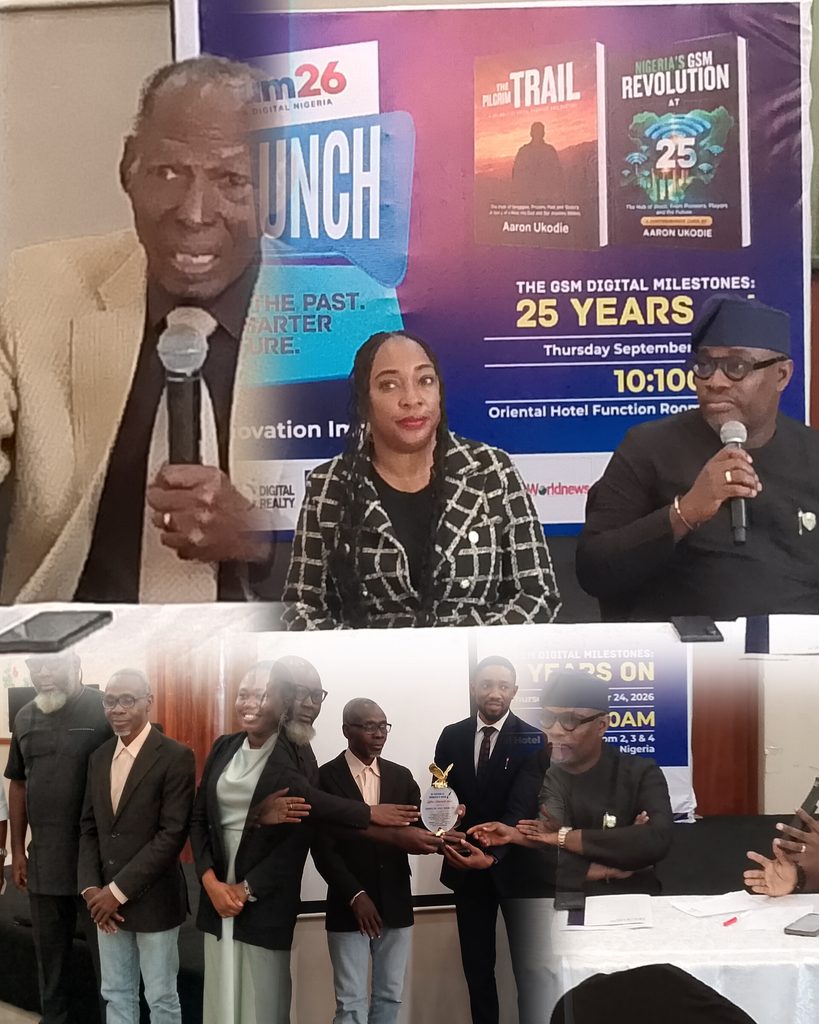
Twenty-five years after the introduction of GSM services in Nigeria, technology and media stakeholders have reflected on the profound changes brought about by mobile communication, while highlighting the need to place greater emphasis on people, innovation and the responsible use of digital technology.
Newsconnect reports that the experts spoke during a panel session at the 12th edition of the eWorld Forum in Lagos, themed “The GSM Digital Milestones: 25 Years On.”
The forum brought together stakeholders to examine the evolution of Nigeria’s telecommunications industry and the impact of GSM on communication, businesses and various sectors of the economy.
Speaking during the panel session, veteran ICT expert Chris Uwaje, popularly known as “The Oracle of ICT,” said the GSM narrative was fundamentally about communication, but stressed that human beings remained at the centre of the communication process.
Uwaje noted that communication infrastructure enables people to create and share content through digital devices, stressing the importance of developing the human mind to communicate information that is truthful and authentic.
According to him, there is a need to build innovative and resilient minds capable of navigating the changing communication environment.
He said the GSM revolution had given people a voice and helped to democratise human relations, adding that the digital ecosystem had significantly changed the way people communicate and interact.
GSM Has Transformed Every Sector — Ogunbiyi
Also speaking, Olaitan Ogunbiyi, Director of Operations at IHS, said the availability of GSM in the hands of virtually everyone had revolutionised different sectors of the economy.
Ogunbiyi identified healthcare, transportation, manufacturing and technology among the sectors that have been affected by technological advancement.
He traced Nigeria’s telecommunications development from the 2G era, explaining that internet connectivity at the time was largely based on technologies such as EDGE and GPRS, which offered relatively slow speeds.
According to him, the introduction of 3G licences around 2006 brought faster internet connectivity as operators began deploying the technology.
He added that the sector subsequently moved into the 4G era around 2016, alongside the development and expansion of fibre-optic infrastructure.
Ogunbiyi noted that technology continues to evolve, with major technological transitions occurring over periods of roughly eight to 10 years.
Digital Revolution Has Changed Way of Life
The panel discussion highlighted the broader impact of GSM on the Nigerian society, with participants noting that mobile connectivity has evolved from primarily supporting voice communication to enabling internet access and a growing range of digital services.
Other panelists who shared their experiences and responded to questions on the GSM revolution and its impact included Ololade Saraki of Paradigm Initiative and journalist Mr Ken Nwobo. The panel session moderator was Emma Okong, The ICT Editor for Thisday Newspaper.
The discussions provided an opportunity to reflect on the progress recorded since GSM was introduced 25 years ago, while drawing attention to the human and technological factors that will shape Nigeria’s digital future.