

By Abayomi Elias
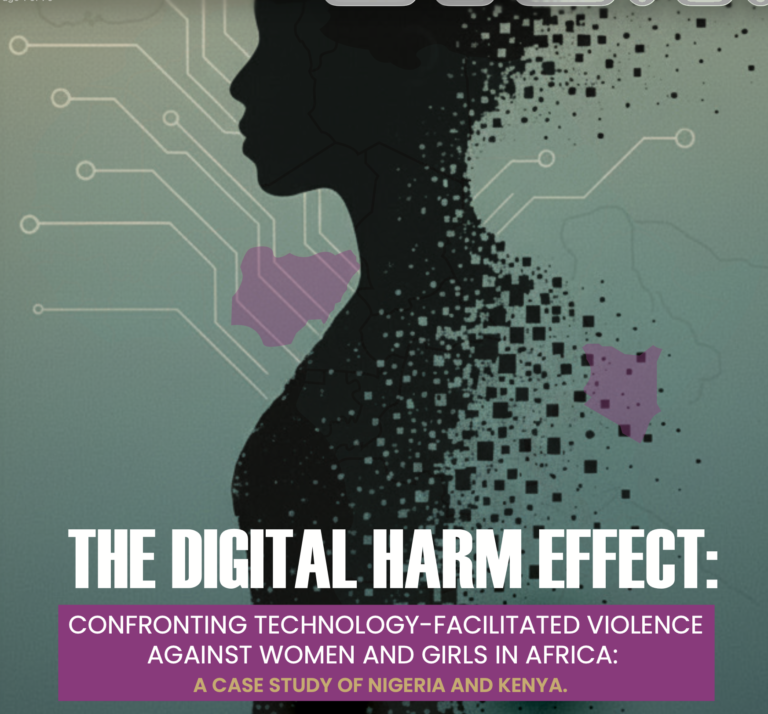
More than half of Nigerian survivors of technology-facilitated violence are dissatisfied with the support they receive after reporting online abuse, a new report by the Women Advocates Research and Documentation Centre (WARDC) has revealed.
Newsconnect online reports that The report, titled “The Digital Harm Effect: Confronting Technology-Facilitated Violence Against Women and Girls in Africa: A Case Study of Nigeria and Kenya,” found that only 41.4 per cent of respondents in Nigeria said they were satisfied with the support they received.
The finding raises fresh concerns about the effectiveness of existing mechanisms for protecting women and girls from online abuse and ensuring that survivors obtain meaningful justice after reporting incidents.
According to the report, reporting an abusive incident should not be regarded as the end of the process, but rather the beginning of a survivor-centred response that provides guidance, protection, support and accountability.
The Nigerian component of the study involved 223 respondents across all 36 states, while 292 respondents were surveyed in Kenya.
The research found that technology-facilitated violence takes several forms, including psychological harassment, cyberstalking, surveillance, sexual exploitation and the non-consensual sharing of intimate images.
In Nigeria, WhatsApp harassment and the non-consensual sharing of naked pictures were identified among the forms of online abuse experienced by women.
The report said young women, activists and journalists face significant risks, while digital illiteracy, gaps in cyber legislation, stigma and victim-blaming further expose survivors to abuse.
It also warned that the actual scale of the problem could be significantly larger than available data suggest, as rural women, people without smartphones and survivors who are afraid to identify their abusers may remain invisible in research findings.
Justice System Under Pressure
The report identified weaknesses within justice systems in both Nigeria and Kenya as major factors enabling technology-facilitated violence.
It noted that police require stronger digital-forensics skills, while prosecutors and courts need greater understanding and capacity to deal with technology-related abuse.
In Kenya, the study highlighted what it described as a paradox of having legislation without adequate protection. Although the country has the Computer Misuse and Cybercrimes Act, 2018, the report said poor implementation, suspicion of authorities, stigma and limited survivor-centred support remain challenges.
Social media platforms such as Facebook, WhatsApp, Instagram, TikTok and Twitter were identified as major spaces where women and girls experience harassment through private messages, group spaces and public shaming.
Women’s Groups Filling the Gap
The report also acknowledged the role of feminist organisations and movements in responding to digital violence and supporting survivors.
Organisations including Womanifesto, AREWA MeToo, FIDA Kenya and CREAW were highlighted for mobilising support and demanding accountability.
However, the report said such activism remains scattered and under-resourced, despite the scale of technology-facilitated violence.
WARDC’s Recommendations
To address the growing threat, the report called for stronger laws and policies that clearly define and criminalise the full range of technology-facilitated violence against women and girls.
It recommended continuous training for law enforcement officers and judicial officials on trauma-informed and survivor-centred responses, as well as standard procedures for handling digital evidence and dedicated units for technology-facilitated violence.
The report also called for safe and accessible reporting channels, comprehensive survivor support, digital literacy, public awareness and community education, particularly among young people.
It urged greater collaboration between government, civil society organisations, technology companies and feminist networks, alongside sustained funding and improved data systems.
The report stressed that technology must not become another arena of violence against women, calling on African countries to move beyond token reforms and strengthen accountability for both state institutions and technology platforms.
Its central message is clear: reporting online abuse should be the beginning of the search for justice—not the end of it.