

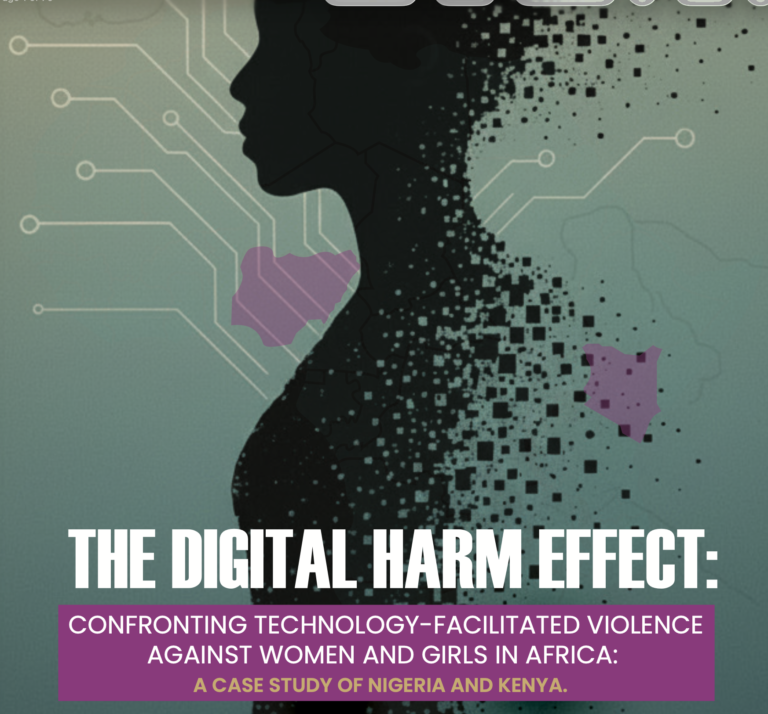
A comparative study by the Women’s Advocates Research and Documentation Centre (WARDC) has raised concerns over widespread technology-facilitated violence against women and girls in Nigeria and Kenya, calling for stronger laws, improved justice systems and greater accountability from social media platforms.
The report, titled “The Digital Harm Effect: Confronting Technology-Facilitated Violence Against Women and Girls in Africa,” highlights how digital platforms increasingly expose women and girls to harassment, cyberstalking, sexual exploitation, surveillance and other forms of abuse.
Published on April 24, 2026, News connect online reports that the study describes the growing contradiction between the opportunities offered by digital technology and the risks women face while using online platforms.
According to the report, nearly every woman surveyed in Nigeria and Kenya had experienced some form of technology-facilitated violence.
In Nigeria, the research surveyed 223 respondents across the country’s 36 states, revealing that online abuse cuts across geographical regions, socioeconomic backgrounds and age groups.
The report identified harassment through WhatsApp groups and the non-consensual sharing of intimate images as some of the common forms of digital violence in Nigeria.
Young women, journalists and activists were highlighted as particularly vulnerable, while stigma, victim-blaming, limited digital literacy and weaknesses in cybercrime legislation continue to make it difficult for survivors to obtain justice.
The study also warned that rural women, women without smartphones and survivors who are afraid to identify their abusers may be underrepresented in the findings.
Kenya Faces Protection Gaps Despite Cybercrime Law
In Kenya, the study surveyed 292 respondents and found similar patterns of technology-facilitated violence.
Although the country has the Computer Misuse and Cybercrimes Act of 2018, the report argued that the law’s gender-neutral provisions fail to adequately address the specific ways technology-facilitated violence affects women and girls.
Poor implementation of existing laws, distrust of authorities, social stigma and inadequate survivor-centred support services were identified as major obstacles to addressing online abuse.
The report noted that these challenges often discourage survivors from reporting incidents, allowing perpetrators to continue their activities with limited consequences.
Social Media Platforms Under Scrutiny
The report identified Facebook, WhatsApp, Instagram, TikTok and X, formerly Twitter, as major digital spaces where women and girls experience harassment through private messages, group conversations and public shaming.
Other forms of abuse highlighted include cyberstalking and the non-consensual distribution of intimate images.
It further criticised institutional shortcomings in addressing digital violence, noting that some police officers lack the necessary digital forensic skills, prosecutors are unfamiliar with online abuse cases, and courts are inadequately equipped to handle technology-related offences.
Young people aged 15 to 25 were identified as particularly exposed to digital risks, with the report calling for more targeted protection and intervention programmes.
Feminist Groups Fill Protection Gaps
Despite the challenges, the report acknowledged the efforts of feminist organisations and advocacy groups working to support survivors and demand accountability.
Among the organisations identified were Womanifesto, AREWA MeToo, FIDA Kenya and CREAW.
However, it observed that many of these initiatives remain fragmented and underfunded, limiting their ability to respond effectively to the scale of the problem.
WARDC Report Recommends Stronger Laws, Accountability
To address the situation, the report called on Nigeria and Kenya to strengthen their legal frameworks to clearly define and criminalise the different forms of technology-facilitated violence against women and girls.
It recommended continuous training for law-enforcement officers, prosecutors and judicial personnel on trauma-informed and survivor-centred approaches.
The study also advocated the establishment of accessible reporting channels, standard procedures for handling digital evidence and specialised units to investigate technology-facilitated violence.
Other recommendations include public awareness campaigns, digital literacy education, community engagement and stronger partnerships between governments, civil society organisations, technology companies and feminist networks.
The report stressed the need for sustained funding and improved data collection systems to support prevention, survivor assistance and evidence-based policymaking.
It also called for the inclusion of young people, women with disabilities and other vulnerable groups in efforts to develop safer and more inclusive digital spaces.
Call for Safer Digital Spaces
The report maintained that technology cannot be considered a genuine tool of empowerment if women and girls remain exposed to abuse and intimidation online.
It urged governments and technology companies to move beyond limited reforms and adopt coordinated, gender-sensitive strategies that protect survivors, strengthen justice systems and end impunity.
The study concluded that digital platforms must become safer spaces where women and girls can participate freely without fear of harassment, exploitation or violence.
The full report, “The Digital Harm Effect: Confronting Technology-Facilitated Violence Against Women and Girls in Africa: A Case Study of Nigeria and Kenya,” is available on the WARDC website.