

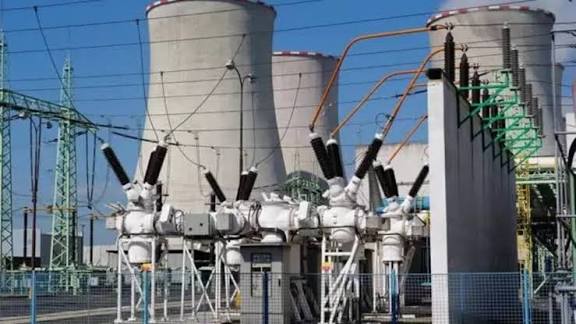
Power Generation Companies (GENCOS) have blamed Nigeria’s persistent electricity crisis on what they describe as the Federal Government’s failure to honour critical debt repayment promises—leaving the sector financially strangled and operationally weakened.
The Association of Power Generation Companies (APGC) says the mounting debt owed by the Federal Government has severely crippled their ability to deliver stable power supply to Nigerians.
Speaking on The Morning Show on Arise News on Thursday, Newsconnect reports that APGC Chief Executive Officer, Dr. Joy Ogaji, laid bare the staggering figures behind the country’s epileptic electricity supply.
According to her, GENCOS generate a monthly invoice of about ₦280 billion, but only 35 percent—approximately ₦80 billion—is paid, leaving a recurring shortfall of nearly ₦200 billion every month.
She explained that the cumulative impact of this deficit has ballooned dramatically.
“If you calculate the ₦200 billion monthly shortfall from 2024 alone, the figure runs into trillions.
The debt didn’t start today. From 2015 to 2024, it rose to ₦4 trillion, and as of this month, it has climbed to about ₦6.5 trillion,” she stated.
Dr. Ogaji criticized the Federal Government’s proposed ₦800 billion promissory note, describing it as grossly inadequate in addressing a debt profile that was already ₦4 trillion at the time and continues to grow.
“You cannot apply ₦800 billion to a ₦4 trillion debt that is still swelling like garri soaked in water without a concrete plan to stop the accumulation,” she said.
She further revealed that during a meeting with President Bola Ahmed Tinubu on July 25, 2025, the President assured GENCOS of approval of ₦4 trillion to settle legacy debts accumulated up to 2024.
However, Ogaji expressed concern that the promise has yet to materialize in full.
“If ₦500 billion is what is now being offered, that falls short of the President’s commitment. He assured us he would work with his team to prevent the debt from growing further,” she said.
The APGC boss suggested that bureaucratic bottlenecks may have stalled the full implementation of the President’s pledge.
“What I believe is that the ₦4 trillion intervention has been fragmented without considering its implications for generation companies,” she added.
Ogaji questioned the sustainability of expecting GENCOS to continue operating under such financial strain.
“If you owe a business ₦6.5 trillion and still expect it to function optimally, something is wrong. With strong political will, ₦4 trillion can be raised,” she insisted.
As Nigeria continues to grapple with unstable power supply, stakeholders say resolving the liquidity crisis in the generation segment remains critical to unlocking consistent electricity delivery nationwide.